A little bit about what blue corn is, before we wade into the actual recipe.
Blue corn
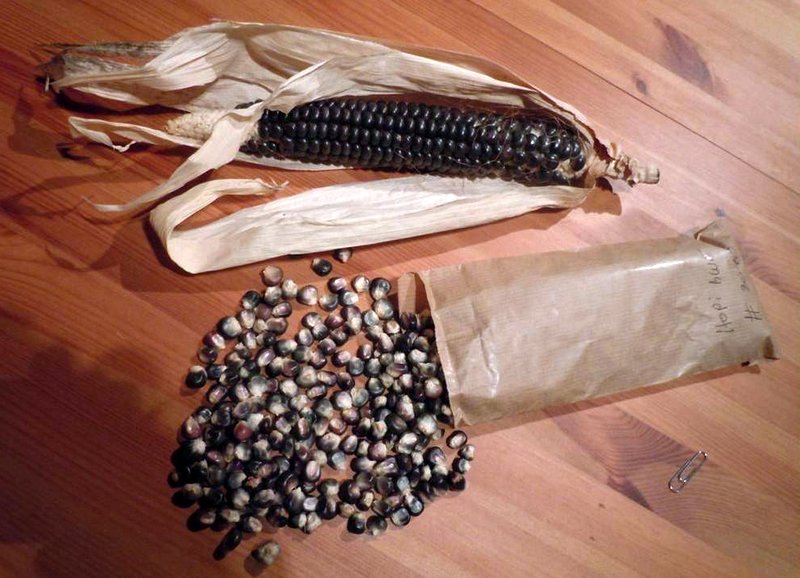
Blue corn, also known as Hopi maize, is a variety of flint corn that originated with the Hopi Native American tribe. Unlike the common yellow or white corn, blue corn has a distinct bluish-purple color due to its high anthocyanin content, which also provides antioxidant properties.

It has been a staple in the diet of Southwestern Native American tribes for centuries, valued not only for its unique color but also for its rich, slightly sweet, and nutty flavor. Blue corn is traditionally used in various forms, including ground into meal for making tortillas, bread, and a traditional dish known as blue corn mush.
Creating an entirely authentic recipe for Blue Corn Mush in its most ancient and original form is challenging, as historical details are not well-documented, and cooking methods likely varied among the different Hopi people. However, this a basic interpretation, inspired by historical practices.
Ingredients
Method
- Historically, Hopi people cultivated and used blue corn. If available, harvest blue corn and dry the kernels.
- Grind the dried blue corn into a fine meal. Hopi people traditionally used grinding stones or manos and metates for this purpose.
- Mix the ground blue corn with water to create a thick paste or dough. The consistency should be similar to that of a porridge.
- Position the cooking vessel over an open flame or hot stones. The Hopi people often cooked over an open fire or used hot stones placed into the mixture to heat it.
- Stir the blue corn mixture constantly to prevent it from sticking to the bottom of the pot. The cooking process likely required attentive stirring to achieve a smooth consistency.
- Add a pinch of salt to enhance the flavor. While salt might not have been used traditionally by all Native American tribes, it could have been accessible to the Hopi people.
- Allow the blue corn mixture to simmer over the open flame or hot stones until it thickens to the desired consistency. The cooking time may vary based on the heat source and the specific conditions.
- Ladle the blue corn mush into bowls and serve it warm. It may be eaten as a side dish or a staple food in the Hopi diet.
- Depending on availability, Hopi people might have added other ingredients such as wild berries or honey for sweetness or flavor variety.

Hopi people traditionally used clay pots or earthenware for cooking. If possible, use a vessel that reflects these materials and methods.
This recipe is a modern interpretation based on historical knowledge, and variations likely existed among different Hopi families and communities. Adjustments can be made based on available ingredients and personal preferences while keeping the traditional methods and ingredients in mind.
